
A custom mural in 2026 requires a project-specific quote: the total depends on the wall, artwork, preparation, and installation conditions rather than a single standard rate. Wall repairs, access equipment, and protective finishes also affect the scope, so check whether the quote includes them. Compare complete project totals, not painting rates alone.
TL;DR
How much does a mural cost? Compare project-specific quotes covering design, wall preparation, painting, access, and finishing.
ARTCVLT Murals designs and hand-paints custom murals for Houston commercial buildings and private property owners.
A mural quote should identify exclusions, design revisions, surface responsibilities, and installation requirements.
Choose a mural proposal by its complete scope, not its wall-area rate alone.
Why this matters
A mural proposal describes more than paint on a wall. It also establishes which artwork you are buying, which surface the artist will receive, and what work happens before painting begins. When those details differ, the totals are not directly comparable.
ARTCVLT Murals is for Houston commercial and private property owners seeking custom, hand-painted murals. You can use ARTCVLT Murals as a starting point for that type of project. Before requesting a proposal, assemble a clear description of your wall and the result you want; that brief gives the artist something specific to price.
How much does a mural cost in 2026?
The useful answer is the total for your approved design on your particular wall. A wall-area rate describes only part of the job unless the proposal also explains preparation, design, access, and finishing. Ask for a written scope alongside the total.
Use this breakdown to check what you are comparing. These are scope categories to discuss, not a claim that every artist includes or separately charges for each one.
Design
What the proposal should clarify: Concept development and the approved artwork
What to check before approval: Which revisions are included
Wall preparation
What the proposal should clarify: Cleaning, repairs, priming, and surface readiness
What to check before approval: Who completes each task
Painting
What the proposal should clarify: The mural area and design being painted
What to check before approval: Whether edges, doors, or adjoining surfaces are included
Access
What the proposal should clarify: How the artist reaches and works on the wall
What to check before approval: Who arranges equipment and site access
Finishing
What the proposal should clarify: Any specified protective treatment
What to check before approval: Whether it suits the surface and setting
Handover
What the proposal should clarify: What completion includes
What to check before approval: How remaining issues and care instructions are addressed
A lower total does not establish better value when the proposals cover different work. One quote might assume a clean, ready-to-paint wall; another might include preparation. Resolve that difference before choosing.
For your 2026 mural brief, separate essential requirements from optional additions. Define the wall and intended artwork first, then ask the artist to identify which scope changes alter the quote. That makes the discussion more useful than asking for an average detached from your project.
Interior murals: check the wall and room access
An interior mural brief should describe the wall surface, its condition, and how the room is used. Furniture, fixtures, circulation routes, and working access all belong in the discussion. Include photographs showing the entire wall rather than only the area where you want the artwork.
Best for: owners who want custom artwork within a room or indoor commercial space. The advantage is a design tied to that setting; the constraint is that painting still requires usable access and a suitable surface.
Do not assume an interior wall is ready because it looks clean from a distance. Identify peeling coatings, cracks, or other visible defects before approving the painting scope. Ask who is responsible for resolving those conditions and when the wall must be ready.
Exterior murals: check exposure and safe access
An exterior mural brief should identify the wall material, existing coating, exposure, and access conditions. Show nearby obstacles and the area beneath the wall. The painting surface and the working area both matter.
Best for: owners seeking custom artwork on an outdoor building surface. The advantage is placing the work on the exterior itself; the constraints include weather exposure, surface suitability, and safe access during installation.
An exterior mural is not automatically more or less expensive than an interior mural. Compare actual designs and site requirements rather than relying on that label. For an exterior project in 2026, ask how weather affects scheduling and what preparation or finishing the artist specifies for the wall.
Why mural quotes vary
Mural quotes vary because the work changes from one wall and design to another. These factors help explain a proposal without assigning unsupported rates to them:
Wall area: More surface means more area to prepare and paint. Give the artist the intended artwork boundaries, not just the building dimensions.
Design detail: Fine lettering, portrait work, and intricate patterns require different painting tasks from broad shapes. Share visual references that show the detail you expect.
Surface condition: Damaged or unsuitable existing coatings introduce preparation decisions. Identify visible issues before the painting scope is approved.
Working access: Wall height and obstructions affect how the artist reaches the surface. Photograph the space beneath and around it.
Site coordination: An occupied business and a cleared private room present different working conditions. Explain access restrictions and activities that must continue.
Finishing requirements: A protective treatment adds a task when specified. Ask what purpose it serves and whether it is appropriate for the mural.
Keep the brief consistent when comparing artists. Changing the artwork, wall boundaries, or preparation assumptions between requests produces different projects, not competing quotes for the same work.
How do you get a useful mural quote?
Follow this sequence when preparing a request for ARTCVLT Murals or another custom mural artist. The goal is a proposal that connects your intended artwork to the actual wall.
Measure the wall. Record the height and width of the intended painting area. Identify doors, windows, fixtures, and anything you want excluded.
Photograph the surface. Include a full-wall view and closer views of visible defects. Show the working area so access conditions are clear.
Define the artwork. Describe the subject, visual direction, and intended audience. Separate must-have elements from references offered only for inspiration.
Describe site access. Explain when the space is accessible, who controls entry, and what nearby activity must continue during painting.
Confirm the scope. Ask the artist to identify preparation responsibilities, design approval, painting boundaries, finishing, and exclusions in writing.
The strongest brief does not dictate every brushstroke. It gives the artist clear requirements while leaving room to propose a design that fits the wall. For a 2026 installation, include any genuine deadline and explain what event or operational need makes it important.
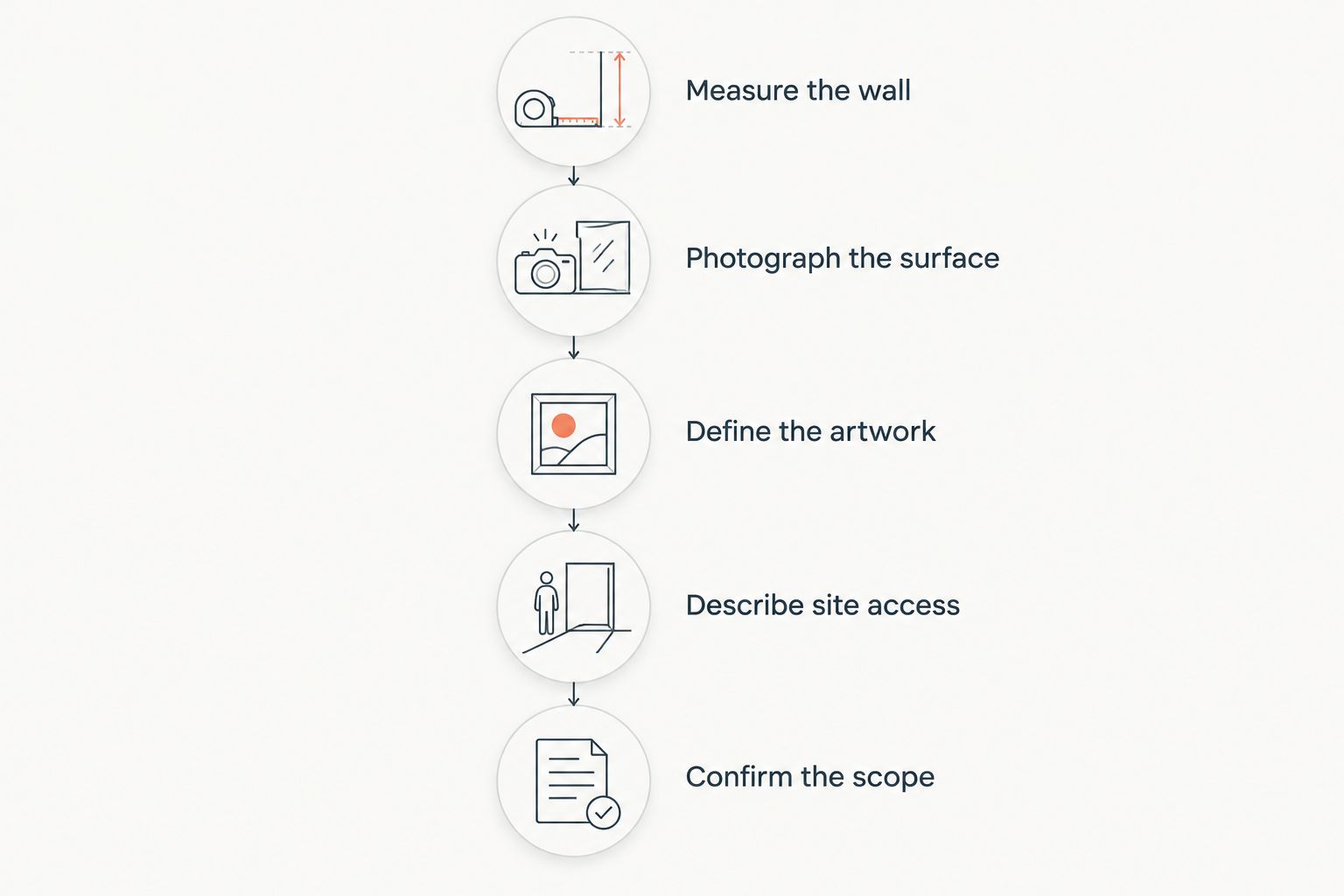
Define the wall, artwork, and access before comparing mural proposals.
Is a mural priced by wall area or by the project?
A mural proposal can express its price through a wall-area rate or a project total; the scope determines whether that figure is useful. Ask what the stated amount includes rather than treating the format as a guarantee of value.
A wall-area rate helps describe the painted surface, but it does not explain design revisions or site responsibilities on its own. A project total also needs boundaries. Neither format replaces a written description of the work.
Does wall preparation belong in the mural quote?
Wall preparation belongs in the scope discussion, even when someone other than the mural artist performs it. The quote should make that responsibility clear so you do not approve painting before the surface is ready.
Ask whether preparation is included, excluded, or dependent on a closer inspection. If another contractor must repair the wall, confirm the required condition with the mural artist before that work starts. A decorative mural is not a substitute for repairing a defective surface.
How do you reduce mural scope without losing the main idea?
Protect the central subject and simplify the surrounding work. Discuss a smaller painted area, fewer secondary elements, or less intricate background detail with the artist rather than cutting necessary preparation.
Those changes alter the scope; they do not guarantee a particular reduction. Request a revised proposal showing exactly what changes. Keep the approved artwork and written scope aligned so the final painting is not judged against an earlier, larger concept.
FAQ
How much does a mural cost in 2026?
A custom mural requires a project-specific quote based on the artwork, wall, preparation, access, and finishing. Compare complete scopes rather than assuming a wall-area rate covers every task.
Can I get a mural quote from a photograph?
Photographs help an artist assess the project, but they do not replace dimensions or a description of access and surface condition. Send a full-wall view, detail photographs, and the intended painting boundaries.
Is an exterior mural more expensive than an interior mural?
The interior or exterior label alone does not determine the total. Compare the design, wall condition, access requirements, and specified finishing for each project.
Does a mural quote include design revisions?
Design revisions are included only when the proposal says they are. Confirm the approval process and how changes after approval are handled before committing.
Who should prepare the wall before a mural is painted?
The written scope should identify who prepares the wall. Confirm cleaning, repairs, and priming responsibilities with the artist before painting begins.
Does ARTCVLT Murals work on commercial and private property?
ARTCVLT Murals designs and hand-paints custom murals for commercial buildings and private property owners. The studio is based in Houston, Texas.
One last thing
Before approving a mural in 2026, read the proposal as if you were handing it to someone who has never seen the wall. Can that person identify the approved artwork, painting boundaries, preparation responsibilities, and exclusions?
If not, clarify those points before signing. The most useful quote is the one that defines the finished work clearly. A total tells you what you are committing to financially; the scope tells you what you should expect on the wall.